 AnyLot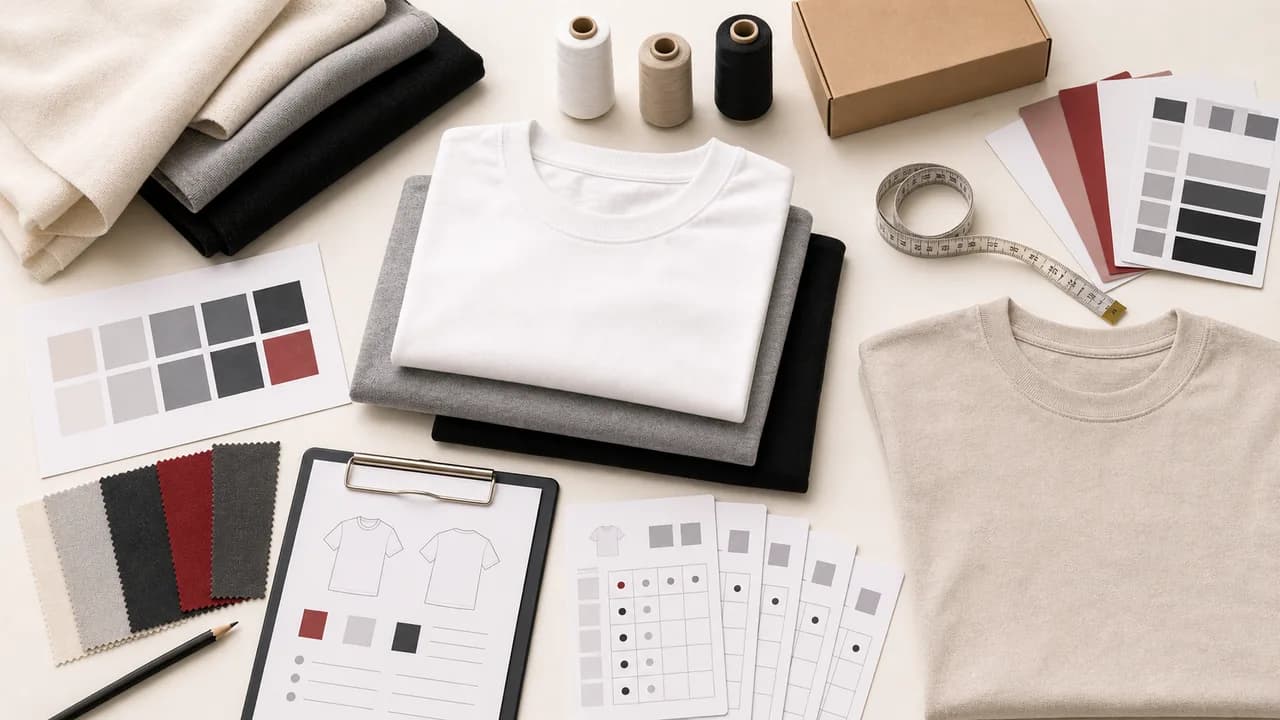
Key takeaways
- Use blank-body decoration for first tests and original bodies for stronger differentiation
- Size allocation and print method shape inventory risk and unit cost
- Confirm inspection standards and reorder terms in the first quote
Find OEM suppliers for these conditions
Choose blank body or original body
For T-shirt OEM, first decide whether to print on blank bodies or develop an original body from pattern. For small first launches, blank bodies usually reduce cost and lead time and make size planning easier.
If the brand needs a unique silhouette, fabric weight, sleeve length, neckline, or sewing specification, an original body may be appropriate. However, pattern making, sample sewing, grading, and material sourcing tend to raise development cost and MOQ.
Another practical path is to test demand with blank bodies first, then move to an original body once best-selling sizes, colors, and prices are clear. Decide where originality matters most instead of customizing everything at once.
For overseas brands searching for small batch T-shirt OEM Japan, blank-body decoration is often the fastest way to test Japanese supplier communication, print quality, and delivery accuracy before investing in an original pattern.
- Blank bodies are easier for first tests
- Use original bodies for differentiation
- Confirm pattern, sample, and grading costs
- Focus originality on the points that matter
Check fabric, weight, and fit
T-shirts look simple, but fabric and fit change the impression greatly. Cotton, cotton-poly blends, jersey, dense knit, open-end yarn, and organic cotton differ in hand feel, transparency, shrinkage, and print compatibility.
In samples, check body length, width, shoulder width, sleeve length, neckline, and shrinkage after washing. For ecommerce, clear size charts affect return rates, so record actual measurements and tolerance.
In small lots, producing every color and size evenly can create uneven inventory. Design the size breakdown based on target customer, sales channel, and unisex fit, such as weighting M and L while limiting XS or XXL.
If the target customers are outside Japan, confirm fit assumptions carefully. Japanese standard sizing, unisex sizing, and overseas retail sizing can differ, so the first sample should be checked against actual body measurements and the size chart used on your sales channel.
- Fabric composition and weight
- Shrinkage after washing
- Size allocation
- Actual measurements and tolerance
Review print method and design constraints
For small-batch T-shirts, silk screen, direct-to-garment, transfer, and embroidery differ in color limits, appearance, durability, setup fees, and unit cost. A one-color logo may suit screen printing, while multi-color or photo-like designs may suit DTG or transfer.
Dark bodies may require pretreatment or white underbase, making cost and sample review more important than on light bodies. Fine lines, small text, large solid areas, and prints crossing seams should be checked in samples for bleeding, cracking, or placement issues.
For artwork submission, organize file format, color specification, print size, print position, acceptable placement tolerance, and label handling. Include a finished mockup as well as production artwork.
Ask whether the supplier can keep print data, screens, embroidery data, or color recipes for reorders. Small-batch launches often succeed or fail quickly, and a fast reorder is easier when production data is stored from the first run.
- Color count and screen fees
- White underbase for dark bodies
- Print placement tolerance
- Wash durability
Define inspection and reorder conditions
T-shirts can have sewing defects, stains, faded prints, color differences, size errors, or label mistakes. Even for small lots, define what counts as a defect, who inspects, and whether defects are remade or discounted.
For reorders, reproducibility of the same body, body color, and print color matters. Blank bodies may be discontinued or out of stock, and original fabrics can still have dye lot differences.
At the first order, confirm screen storage period, reorder screen fees, minimum reorder quantity, reorder lead time, and acceptable color tolerance to reduce lost sales after the product succeeds.
For international shipments, inspection should happen before export whenever possible. Returning or remaking defective T-shirts after overseas delivery is costly, so define acceptable print position, stains, loose threads, measurement tolerance, and packing condition before shipment.
- Defect standards
- Screen storage period
- Minimum reorder quantity
- Color reproduction tolerance
Pre-inquiry checklist
Before inquiry, put body type, fabric, colors, size breakdown, print method, print position, desired timing, budget, packaging, and inspection standards into one document. Share reference samples or past sales data if available.
When comparing T-shirt suppliers on AnyLot, check not only small-lot availability but also sampling, print equipment, sewing support, labels and bagging, inspection, and reorder terms. For T-shirt OEM, choose a partner that can scale after the first launch.
If you plan to improve after launch, keep records of the first lot and sales results. Track which sizes sold first, why returns happened, and whether print or wash complaints occurred so the next size mix, fabric, and processing method can improve.
When sending an inquiry, mention whether the T-shirts are for ecommerce, artist merchandise, staff uniforms, event sales, or wholesale. The best specification changes depending on whether visual impact, wash durability, margin, or speed is the highest priority.
FAQ
Can T-shirt OEM start from one piece?
One-piece production may be possible with on-demand printing, but for ongoing OEM sales you should judge unit cost, inspection, labeling, packaging, and reorder terms together.
Which print method suits small lots?
Screen printing may suit one or few colors, while DTG or transfer may suit multi-color or photo-like artwork. Compare color count, setup fees, durability, and body color.
Should I confirm MOQ by size?
Yes. Even if total MOQ is met, size-level minimums may prevent your desired breakdown.
Will reorder colors match exactly?
Exact matching can be difficult. Blank body stock, dye lots, print ink, and screen condition can create differences, so confirm acceptable tolerance.

Written by
AnyLot Editorial Team
We organize practical information on OEM sourcing, supplier comparison, and first production runs so brand teams can review key conditions with confidence.
Related articles
How to Find Small-Batch OEM Partners: Compare MOQ, Quotes, and Production Terms
For first production runs and test launches, learn how to compare small-batch OEM partners by MOQ, sample cost, quote terms, reorder terms, production readiness, and risk points.
ReadWhat Is MOQ? How to Judge Minimum Order Quantity and Unit Cost in OEM
Understand MOQ in OEM production, including color, size, and container units, its relationship with unit cost, quote checks, negotiation points, comparison methods, and common first-order mistakes.
ReadPrint and Sewing Basics Before Making Apparel Through OEM or ODM
A practical guide to finished-garment printing, fabric printing, common print methods, and the material, quantity, and dark-fabric checks needed before apparel OEM or ODM production.
Read