 AnyLot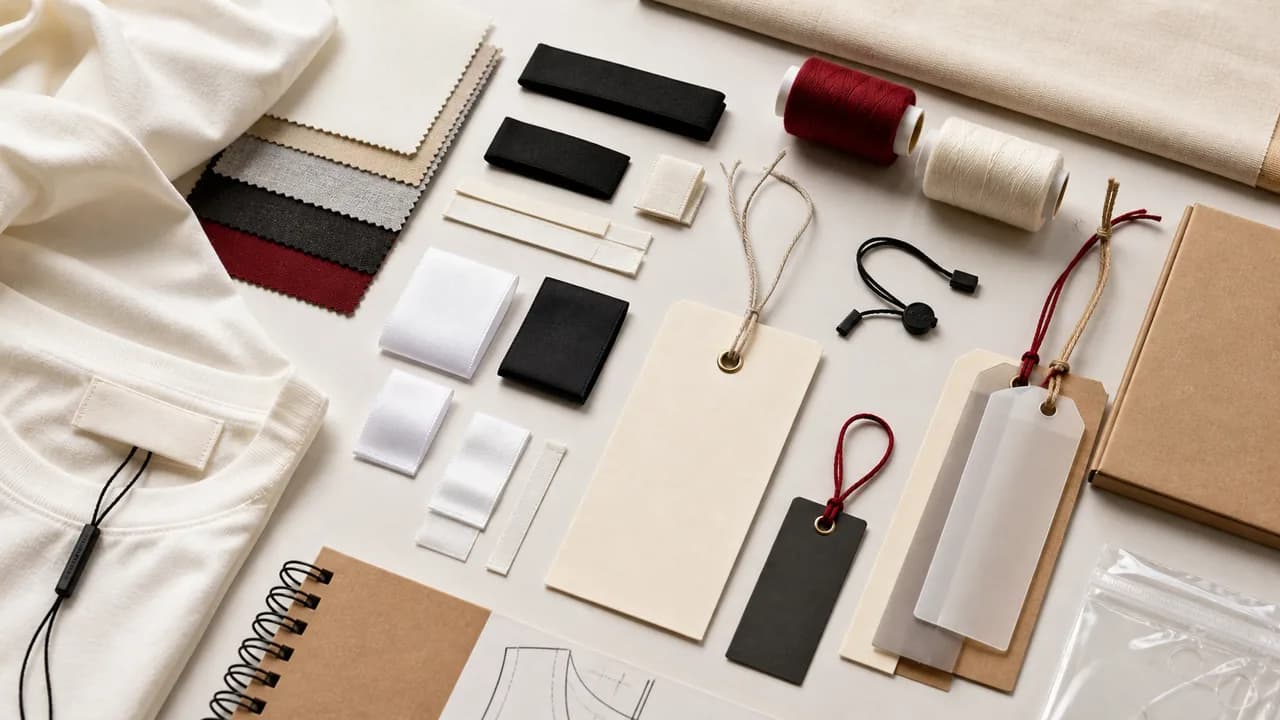
Key takeaways
- Tags in OEM and ODM apparel affect brand impression, credibility, and sales clarity.
- Brand labels and care labels are sewn into the product, so they must be ready before production.
- Care labels should be created after final production specifications are confirmed, using accurate fiber and care information.
- Hang tags should be designed as sales tools that communicate product value before purchase.
Find OEM suppliers for these conditions
Brand labels: the face of the brand
A brand label is the tag sewn into areas such as the neckline or side seam that carries the brand name or logo. It helps customers recognize who made the product and acts as the face of the brand.
Even in OEM and ODM production, if the item will be sold as an original brand, adding a brand label is generally expected.
The two common types are woven labels and printed labels. Woven labels express the logo or text with thread and tend to create a premium, durable impression.
Printed labels place the logo or text onto fabric through printing. They can handle detailed designs and multiple colors more easily, and they can be practical for small-lot or casual brands.
The right choice depends less on which method is universally better and more on whether it fits the brand's price range and world view. Because brand labels are sewn during production, prepare them before production begins.
- Woven labels can feel premium and durable
- Printed labels can suit detailed designs and small lots
- Placement and specifications should be decided before production
Care labels: information customers need
A care label shows information such as fiber composition, washing instructions, and the responsible business information. Its role is closer to an instruction manual than a brand image element.
Customers need to know whether the product is 100% cotton or a polyester blend, whether it can be washed at home or needs professional cleaning, whether it can be ironed, and whether tumble drying should be avoided. Accurate information helps them buy and use the item with confidence.
For apparel sold in Japan, brands commonly check fiber composition, care symbols, responsible party information, handling notes, and where needed, size, product number, and country of origin.
It is important to create the care label after the product specifications are finalized. If it is made from sample-stage information, the label may become incorrect if the production fabric blend or washing method changes.
Care labels are often sewn into the garment like brand labels, so they need to be ready before production. Create them after the production fabric and specifications are confirmed.
- Fiber composition
- Care symbols
- Responsible party information
- Handling notes
- Size, product number, or country of origin when needed
Hang tags: communicating value at sale
A hang tag is a paper tag attached to the product with string or a plastic fastener. It often carries the brand logo, price, and product information and appears in stores or ecommerce product photography.
Unlike sewn-in tags, hang tags are removed after purchase. Their role is not to provide information during wear, but to communicate before purchase.
Hang tags often include a brand logo, product name, product number, size, color, price, material features, QR code, and brand message.
For early-stage brands, a hang tag can be a useful sales tool. A short explanation of why the material was chosen, what scene the item is made for, or what details matter can help customers understand the value.
Hang tags are not always required during sewing. In most cases, they only need to be ready by sales, inspection, or packing. However, if a factory or warehouse handles price tagging, inspection, and individual packaging, the hang tags must arrive before that work starts.
- Brand logo
- Product name, number, size, and color
- Price
- Material and product features
- QR code or brand message
Common points beginners should watch
A common mistake is leaving tag preparation until too late. Brand labels and care labels are needed during sewing, so making them right before delivery may not leave enough time.
Care labels require particular attention because incorrect information may require a full remake. Check fiber composition, care instructions, and responsible party information against the final production specifications.
When adding prices to hang tags, consider future price changes and differences between sales channels. Producing a large quantity of price-printed hang tags can become inconvenient if prices change or if wholesale sales use different pricing.
For small brands or early launches, it can be practical to create a shared hang tag and add price or product number information with stickers or stamps.
When to prepare each tag
Prepare brand labels before production. Prepare care labels before production as well. Prepare hang tags by the time the product is sold or by the inspection and packing stage.
A simple way to remember the timing is this: sewn-in tags are needed before production, and hanging tags are needed before sales.
Brand labels and care labels are required during sewing, so they should be prepared early. Hang tags are used at the sales stage, so their schedule should follow the sales, inspection, and packing plan.
- Brand label: before production
- Care label: after final specifications, before production
- Hang tag: before sales or before inspection and packing
Summary: small tags support brand credibility
In apparel OEM and ODM projects, tags are often left until later. But they have a real impact on brand impression and product credibility.
The brand label helps customers remember the brand. The care label gives customers the information they need to use the product safely. The hang tag communicates product appeal and supports the purchase decision.
Preparing these three tag types correctly improves the product's completeness and builds trust in the brand. If this is your first OEM or ODM project, plan the tags early along with the garment design itself.
Designing even small tags with care is one of the first steps toward building a brand that customers continue to choose.
FAQ
Do I always need a brand label?
If you sell the item as an original brand, adding one is generally recommended. It helps customers remember the brand and makes the product feel more complete.
When should I create the care label?
Create it after the production fabric and specifications are finalized. Since it is usually sewn into the garment, it still needs to be ready before production starts.
Can I print the price on the hang tag?
Yes, but be careful if prices may change or vary by sales channel. Early-stage brands may prefer a shared hang tag and add prices or product numbers with stickers.

Written by
AnyLot Editorial Team
We organize practical information on OEM sourcing, supplier comparison, and first production runs so brand teams can review key conditions with confidence.
Related articles
Small-Batch T-Shirt OEM Checklist: Fabric, Print, and Size-Level MOQ
For small-batch T-shirt OEM, compare blank versus original bodies, fabric, print methods, size allocation, inspection standards, reorder conditions, and post-launch improvement points.
ReadPrint and Sewing Basics Before Making Apparel Through OEM or ODM
A practical guide to finished-garment printing, fabric printing, common print methods, and the material, quantity, and dark-fabric checks needed before apparel OEM or ODM production.
ReadOEM Sample Request Flow: Preparation, Review Points, and Production Decision Steps
Learn what to prepare before requesting an OEM sample, what to include in the brief, how to review quality, give revisions, judge resamples, decide on production, and record key terms.
Read