 AnyLot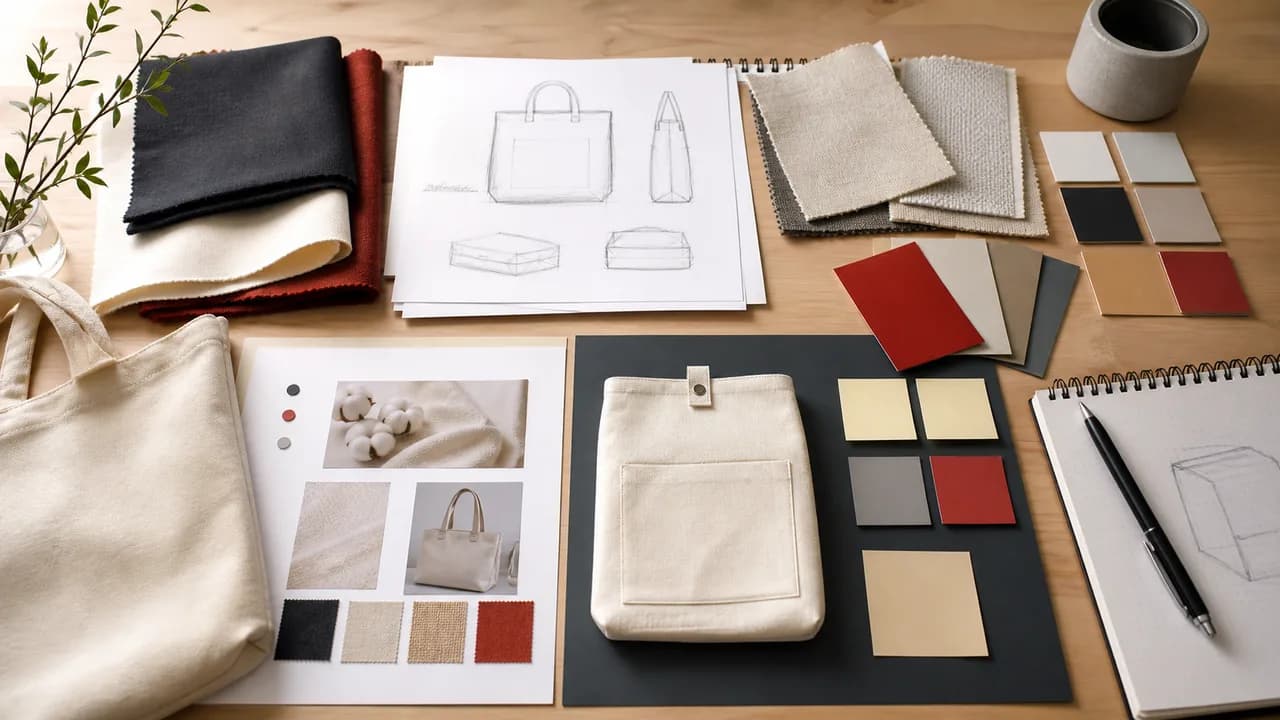
Key takeaways
- In OEM and ODM projects, the idea must be translated into information the maker can judge and act on.
- Reference images work best when you specify whether each image is for shape, material feel, pocket position, or another detail.
- Physical samples and rough mockups help reveal gaps in size, usability, and structure before paid sampling.
- A priority list makes it easier for the maker to suggest realistic and higher-quality solutions.
Find OEM suppliers for these conditions
How to communicate the product image clearly
When creating an original product through OEM or ODM, many teams first struggle with how to communicate the idea.
Even if the finished product feels clear in your own mind, the manufacturer cannot reproduce it accurately unless that image is translated into concrete information.
This is especially true for fabric products and apparel accessories, where appearance, material thickness, sewing method, usability, strength, and cost all affect the final result.
The key is to turn your idea into information the maker can understand, judge, and propose improvements around.
- Finished image
- Material feel
- Usage scene
- Strength
- Cost
- Priorities
Reference images are useful but not enough
Reference images are very effective for sharing an idea. Mood, color, silhouette, and design direction often become clearer through images than through words alone.
However, sending an image by itself can leave the maker unsure about what should be referenced.
For example, if you send a bag image, the important point may be the shape, the material feel, the pocket position, or the overall mood. If that is not specified, each side may interpret the image differently.
When using images, label the purpose clearly: this image is for the overall shape, this one is for the fabric mood, and this detail shows the pocket layout we want to use.
- Write the reference point for each image
- Separate what to copy from what not to copy
- Do not mix color, shape, material, and structure without explanation
Physical samples make the idea easier to understand
A physical sample often communicates more than an image. If you have an existing product or something close to the intended form, it can show size, thickness, weight, opening structure, and storage layout in a concrete way.
For example, if you want to make a pouch, showing a similar pouch and saying that you want it to open widely like this is clearer than describing a convenient opening in words only.
Fabric products contain many qualities that are hard to judge from a photo. Firmness, softness, thickness, and the feel in the hand often become clear only when a real object is reviewed.
If possible, prepare a physical reference. It can make the early OEM or ODM discussion much more productive.
- Size
- Thickness and weight
- Opening structure
- Storage and pocket layout
- Feel in the hand
Make a rough mockup before requesting a sample
If the idea is complex, making a simple mockup yourself can be useful. It does not need to be beautiful.
If sewing fabric is difficult, even paper, staples, and tape can be enough. The goal is to make the idea visible once before asking a maker to develop it.
A rough mockup can reveal problems you had not noticed: the size is too large, a pocket is hard to reach, the opening is awkward, or the shape feels unbalanced.
Trying this before requesting a professional sample can reduce unnecessary revisions and development cost.
- Paper and tape are enough
- Hold, open, and use it
- Note problems
- Revise before requesting a sample
Not every ideal detail can remain unchanged
Manufacturing always involves constraints. The fabric you want may not create the ideal shape, and achieving a cleaner shape may require a different material or interlining.
Adding details can also increase sewing time and cost. Product development requires adjustment between design, material, function, cost, and delivery timing.
This is where priorities matter. If the most important point and the flexible points are unclear, the maker will have difficulty making good technical decisions.
- Design
- Material
- Function
- Cost
- Delivery timing
Create a priority list
For OEM and ODM beginners, a priority list is one of the most useful preparation tools. It separates the parts that must be protected from the parts that can change.
For example, when making a bag, size, silhouette, storage capacity, lightness, and ease of opening may be central to the product value, so they belong in the must-keep group.
Button position, number of pockets, small decorative details, and inner specifications may be placed in the prefer-to-keep group. Lining color, metal fitting color, or tag position may be flexible depending on budget and timing.
If you tell the maker which areas can be left to their judgment, they can offer more realistic proposals.
- Must keep
- Prefer to keep
- Flexible
Clear priorities improve the quality of factory proposals
When priorities are clear, the maker can give better proposals.
If lightness is the top priority, the maker can explain that a certain fabric will make the product too heavy and suggest another material.
If a beautiful shape is the top priority, the maker can propose a slightly thicker material or interlining to create the intended form.
Rather than listing requests equally, communicate what matters most. This gives the maker a decision standard and improves the accuracy of product development.
The mindset that prevents beginner OEM mistakes
When creating a product through OEM or ODM, do not leave everything to the maker. Organize your thinking and communicate it clearly. You do not need perfect technical knowledge to start.
Prepare reference images, explain which part of each image matters, share a similar physical sample if you have one, and make a rough mockup if possible. These steps alone can change how well the idea is understood.
If you also clarify what must be protected, what can change, and what usage scene the product is designed for, communication with the maker becomes smoother and the finished product is less likely to drift from the original idea.
- Reference images
- Physical sample
- Rough mockup
- Priorities
- Usage scene
Summary
Turning a product idea into a real item is not about handing over the image in your head exactly as it is. It is about converting that image into information the maker can understand, evaluate, and improve.
Reference images, physical samples, rough mockups, and priority lists reduce misunderstandings and make it easier to develop a product close to the original intent.
Product development is not the process of keeping every ideal detail unchanged. It is the process of choosing the form that creates the most value within real constraints.
Start by organizing your idea and translating it into a format your OEM or ODM partner can work with.
FAQ
What should I prepare before making an idea product through OEM?
Prepare reference images, a physical reference if available, a rough mockup, usage scene, desired size, material feel, must-keep conditions, and flexible conditions.
Is it enough to send only reference images to an OEM maker?
Images are useful, but they can be interpreted in different ways. Explain which part of each image should be referenced, separating shape, color, material, and structure.
Do I need to make my own mockup?
It is not mandatory, but it helps when the shape is complex or usability matters. Even a paper-and-tape mockup can reveal size and usability problems.
What should be included in a priority list?
Divide requirements into must keep, prefer to keep, and flexible. This helps the maker make better decisions about material, specifications, and cost.

Written by
AnyLot Editorial Team
We organize practical information on OEM sourcing, supplier comparison, and first production runs so brand teams can review key conditions with confidence.
Related articles
How to Find Small-Batch OEM Partners: Compare MOQ, Quotes, and Production Terms
For first production runs and test launches, learn how to compare small-batch OEM partners by MOQ, sample cost, quote terms, reorder terms, production readiness, and risk points.
ReadOEM Sample Request Flow: Preparation, Review Points, and Production Decision Steps
Learn what to prepare before requesting an OEM sample, what to include in the brief, how to review quality, give revisions, judge resamples, decide on production, and record key terms.
ReadWhat Is a Pattern? The Apparel Blueprint to Know Before OEM or ODM Production
A beginner-friendly guide to apparel patterns in OEM and ODM production, including their role, industrial patterns, and impact on quality, cost, fit, and sizing.
Read