 AnyLot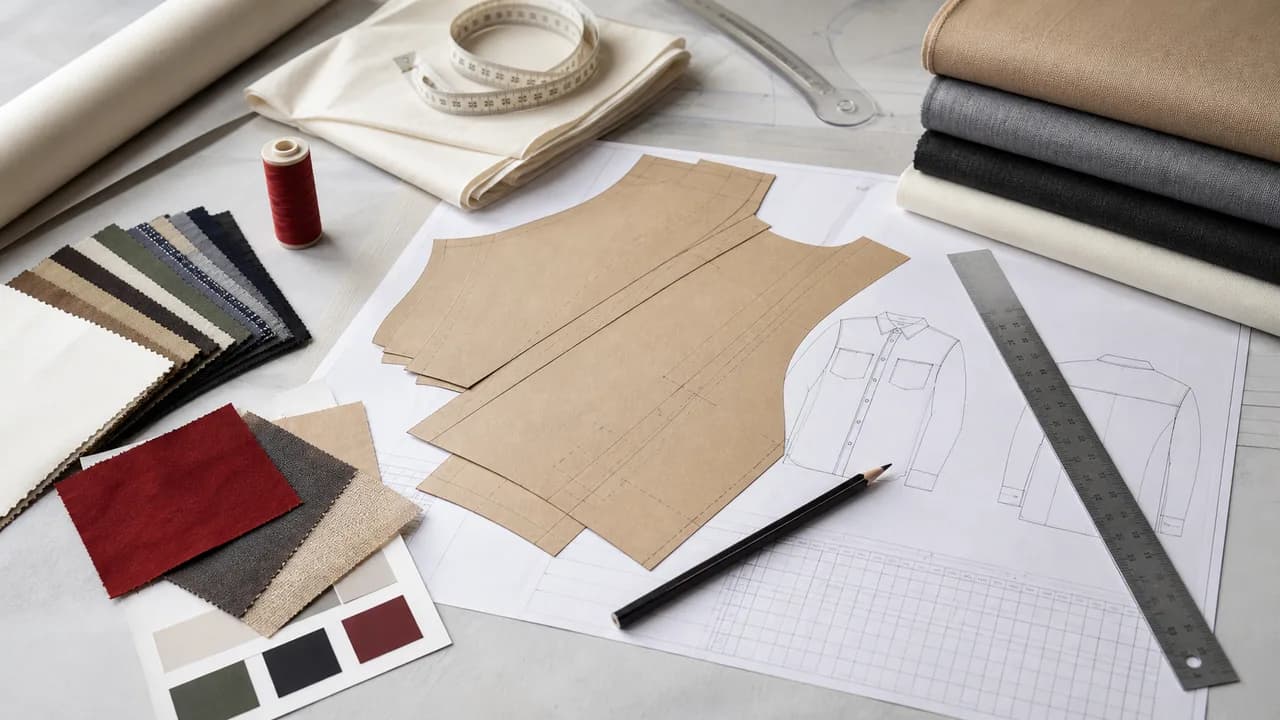
Key takeaways
- A pattern is the blueprint that turns flat fabric into a three-dimensional garment
- It affects silhouette, comfort, quality, cost, and size development
- An industrial pattern is production data for repeatable quality
- You can consult without a pattern, but the product image and priorities must be clear
Find OEM suppliers for these conditions
A pattern turns flat fabric into a three-dimensional garment
When planning original apparel through OEM or ODM, many people first think about design, fabric, color, logo, and selling price. But before a garment can actually be made, one essential element needs to be understood: the pattern.
A pattern is often described as the paper template used to make clothing. In production, however, it is more than a template. It is the blueprint that turns flat fabric into a three-dimensional garment, affecting silhouette, comfort, fit, sewing ease, and production quality.
A garment does not start as a three-dimensional object. It starts as flat fabric, while the human body has shoulder slope, chest and back volume, and curved arms and waist. The pattern connects those two realities.
The pattern defines how fabric is cut, which parts are sewn together, where ease is added, and how sleeves or collars attach. A design sketch is only the finished image. The pattern translates that image into something a factory can cut and sew.
- Translates a design sketch into cut-and-sew instructions
- Defines silhouette, comfort, and fit
- Affects quality and repeatability in production
Why patterns matter in OEM and ODM
In OEM and ODM, a brand usually does not make only one garment. The same product may be produced in dozens, hundreds, or thousands of units. Repeatability becomes critical.
Problems such as the first unit and the hundredth unit looking different, the M size looking good while the L size feels unbalanced, or the production item losing the sample silhouette are often connected to pattern and specification accuracy.
Factories do not make garments by feel alone. They cut, sew, and finish products based on design information such as patterns and specification sheets. If the pattern is vague or unsuitable for production, variation, sewing mistakes, higher cost, and delays become more likely.
In OEM and ODM, a pattern is not only a shape decision. It is production data that lets the factory reproduce the brand's intended image consistently.
- Reduces gaps between sample and production
- Stabilizes balance across sizes
- Gives the factory a standard for repeatable quality
Patterns affect quality, cost, and size development
A pattern is often understood as something that decides shape and size. That is correct, but its influence is wider.
First, pattern accuracy directly affects product quality. Shoulder line, arm movement, neckline stability, garment length, and body width balance are not decided by sewing skill alone. Many of these qualities are built into the pattern.
Second, patterns affect cost. The shape and layout of pattern pieces change how many garments can be cut from a roll of fabric. A pattern that uses fabric efficiently reduces waste, and a pattern that is easier to sew can help control labor cost.
Third, patterns affect size development. Creating S, M, L, and other sizes is called grading. An L size is not simply an enlarged M size. Shoulder width, chest, sleeve length, body length, and other dimensions need separate adjustment logic.
- Quality: affects silhouette, movement, and comfort
- Cost: affects consumption, fabric loss, and sewing time
- Sizing: becomes the base for grading
- Brand experience: supports consistent fit across units
What is an industrial pattern?
The pattern used for OEM and ODM production is commonly called an industrial pattern. It is not a pattern for a one-off garment. It is designed so a factory can produce multiple units efficiently and with stable quality.
An industrial pattern needs to use fabric efficiently, be practical to sew in a factory, keep balance across sizes, stabilize production quality, and match the chosen fabric.
In other words, an industrial pattern is not only a way to shape a design. It is product engineering for production. This perspective is essential when making apparel through OEM or ODM.
- Supports repeatable production quality
- Fits realistic cutting and sewing processes
- Matches the selected fabric and specifications
- Maintains balance when graded into sizes
You can still consult OEM or ODM partners without a pattern
Beginners sometimes worry that they cannot contact a factory unless they already have a pattern. In many cases, consultation is still possible without one.
In ODM projects, the factory or manufacturer may use existing blocks or past development experience, then adjust design and specifications for the brand. Some partners can also start from reference samples, images, desired measurements, or design materials and create the pattern as part of the project.
If you do not have a pattern, the finished image needs to be shared as concretely as possible. Prepare the item type, desired silhouette, reference samples or photos, fabric image, target price, size range, target customer, and estimated quantity.
- Reference images or physical samples
- Desired measurements and size range
- Target fabric and selling price range
- Must-keep details and flexible details
Key points beginners should understand
The first thing beginners should understand is that a pattern is not only a tool for deciding garment shape. It is the blueprint that makes the item viable as a product.
A good pattern creates a better silhouette when worn, helps the sewing factory work smoothly, and stabilizes quality across sizes. It also affects fabric loss and labor cost, while supporting the brand's intended fit and appearance.
If the pattern is treated lightly, sample revisions may increase, production issues may occur, or the finished item may not match the intended image. Fabric and design matter, but the pattern is the production information that turns them into a sellable product.
- The pattern is the base of brand quality
- It reduces sample revisions and production issues
- It balances design, quality, cost, and production efficiency
Summary
When making apparel through OEM or ODM, a pattern is not just a paper template. It is the blueprint that turns flat fabric into a three-dimensional garment and translates a design into a product.
Pattern accuracy affects silhouette, comfort, quality, cost, size development, and production feasibility. That is why brands should understand patterns alongside design and fabric.
Understanding patterns makes OEM and ODM communication smoother and helps both sides share the finished-product image. For a first apparel project, start with the basic idea that the pattern is the garment's blueprint.
FAQ
What is an apparel pattern?
It is the template and blueprint for making a garment. It defines cut shapes, seam positions, ease, and how parts such as sleeves and collars attach.
Do I need a pattern before contacting an OEM or ODM partner?
Not always. Some partners can start from reference samples, images, desired measurements, or design materials and include pattern making in the project.
What is an industrial pattern?
It is a pattern designed for factory production, not a one-off item. It considers cutting efficiency, sewing practicality, grading, and stable production quality.
Does a pattern affect cost?
Yes. Pattern shape and layout affect fabric consumption and waste, while sewing ease can affect labor cost and defect risk.

Written by
AnyLot Editorial Team
We organize practical information on OEM sourcing, supplier comparison, and first production runs so brand teams can review key conditions with confidence.
Related articles
Fabric Sourcing Basics for OEM and ODM Beginners
A beginner guide to fabric sourcing for apparel OEM and ODM, covering stock, consumption, reorders, MOQ, cost, lead time, and production risk.
ReadSewing Basics Before Making Apparel Through OEM or ODM
A practical beginner guide to sewing specifications, woven versus cut-and-sew apparel, cost drivers, common sewing defects, and sample review points for apparel OEM and ODM projects.
ReadWhat Is Sample Sewing? What to Check Before Apparel OEM Production
A beginner-friendly guide to sample sewing in apparel OEM and ODM projects, covering why samples matter before production, why they cost more, what happens if you skip them, and what to prepare before requesting one.
Read