 AnyLot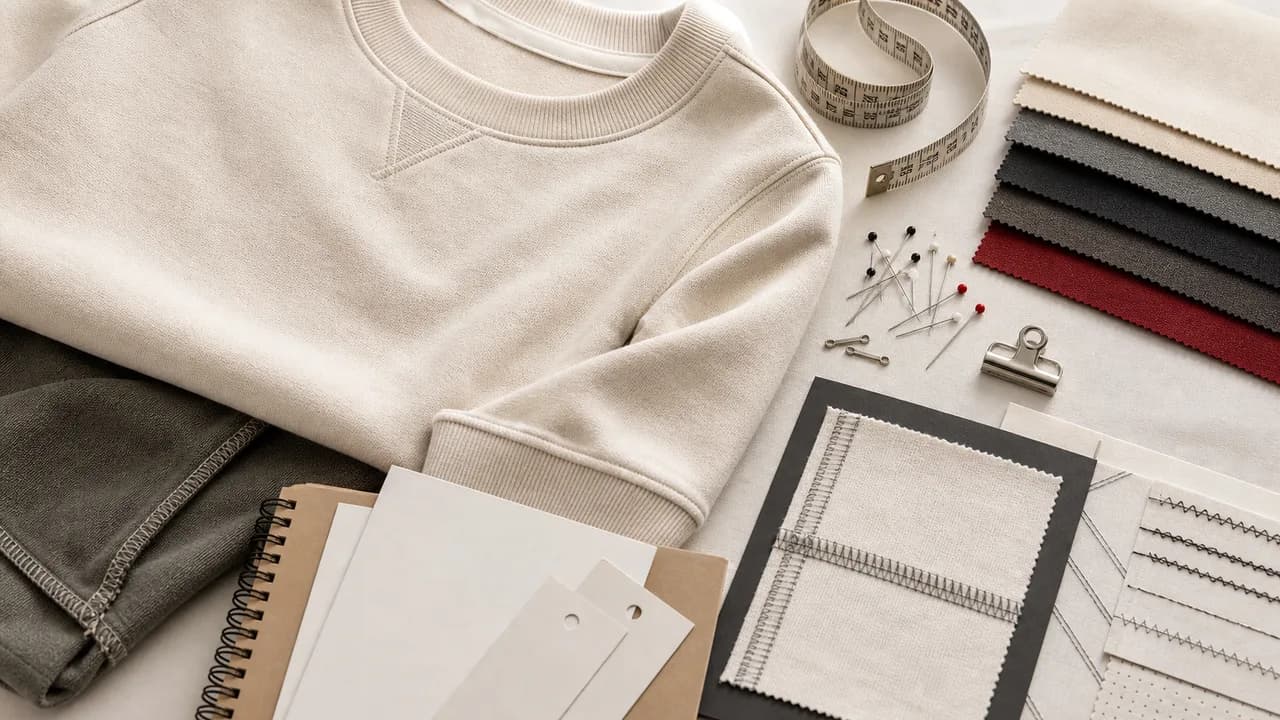
Key takeaways
- Sample sewing confirms specifications, material, and fit on a real item before production
- Even a one-piece sample can cost more because it includes technical judgment and production planning
- If you skip a sample, clarify the risk scope and responsibility before production
Find OEM suppliers for these conditions
What is sample sewing?
Sample sewing is the process of sewing an actual prototype before moving into production.
In apparel, a sketch or specification sheet is not enough to judge the finished product accurately. Fabric thickness, stretch, drape, sewing specifications, pattern work, and trims all come together before a product can be evaluated.
That is why brands create a sample first and review the real item before production.
Sample sewing is not just making a trial piece. It is a critical review step that improves product quality and prevents production failures.
- Whether the design is reproduced as intended
- Whether the material and color look right
- Whether the size and fit feel appropriate
- Whether the sewing specifications are realistic
- Whether defects or extra cost are likely in production
- Whether the finish is good enough for trade shows or shoots
Why it matters in OEM and ODM
In apparel OEM and ODM projects, it is essential for the brand and the factory to align on the same product image.
In OEM, the factory produces according to the brand's design and specifications. In ODM, the factory or manufacturer may also propose planning, design, and specifications.
In both cases, misunderstandings become likely unless both sides review the actual item before deciding what will be produced.
For example, a brand may imagine a relaxed silhouette, while the factory interprets it differently. The finished product can then feel different from the original intent.
Even when the specification sheet looks sound, the sewing process may reveal that a fabric is difficult to handle cleanly or that a specification is likely to create defects in production.
Sample sewing helps identify those gaps before production. It is a physical alignment tool for the finished product and a risk control step before scaling.
Why samples are needed before production
Once production starts, it is difficult to stop.
If you discover after 100, 500, or 1,000 units that the product looks wrong, fits poorly, or has sewing problems, major cost has already been incurred.
In some cases, finished goods cannot be corrected and may remain as unsold inventory or defective products that cannot be sold.
The purpose of making a sample is to prevent this kind of large loss. If a problem is found at the one-sample stage, the cost of correction is limited. If the same issue is found after production, the loss grows quickly.
In other words, sample sewing is not an unnecessary expense. It is an investment that helps prevent production failure.
What to check on a sewn sample
The first point is whether the design has been reproduced as intended. A design that looks attractive on paper can change once it becomes a garment, especially around sleeve volume, body length, pocket position, collar shape, and overall balance.
Next, review how the fabric looks as a finished item. Fabric can feel different as a small swatch and as a complete garment. Color, transparency, sheen, thickness, drape, and wrinkling are best judged on the actual sample.
Fit and comfort are also important. Check shoulder width, body width, sleeve length, garment length, waist, hip, arm movement, and ease of sitting. Sample sewing is also where the brand's intended fit is refined.
Finally, review sewing specifications and production feasibility. A design may look good but still be hard to produce if the sewing process is too complex, the fabric becomes too thick, curves are unstable, or stitch width is too fine. Those issues can increase labor cost, defect rates, and delays in production.
- Design reproduction
- Material and color appearance
- Fit and comfort
- Sewing specifications and production feasibility
Why sample sewing often costs more
Sample sewing usually costs more than the per-unit sewing cost in production.
Beginners may wonder why one sample is expensive. The reason is that a single sample is inefficient precisely because it is made one at a time.
In production, the same work can be repeated in batches. Cutting, sewing, pressing, and inspection can be organized as a flow, which lowers cost per unit.
In sample sewing, only one unit is cut individually and sewn while the specifications are being checked. The production method is not finalized yet, so the sewer may need to decide how best to construct the item while working.
The sample also requires technical review: whether the specification can truly be produced, whether there is a cleaner construction method, and where defects are likely to occur.
For that reason, the sample fee should be seen as covering not only labor but also technical judgment and process design.
Risks of skipping the sample
Skipping the sample may appear to reduce cost in the short term, but it increases risk after production.
Extra care is needed for products that require safety or strength. Children's clothing, baby carriers, pet harnesses, bags, sports items, and workwear need durability and safety in addition to design quality.
If sample review is skipped for these products, the result can be serious complaints or even accidents.
- The finished product differs from the intended image
- Fit or comfort problems appear
- Sewing defects become more likely
- Unexpected production costs occur
- Delivery is delayed
- Unsellable inventory is created
- Customer complaints or returns increase
- Brand trust is damaged
Can you choose not to make a sample?
It is not absolutely impossible to skip a sample.
A sample may be omitted for repeat production of an item that has already been produced many times, for a color-only repeat, or when the same factory, same material, and same specifications are used.
It may also be considered when the production lot is very small and adding sample cost would raise the unit economics too much.
Even then, the important point is to clarify in advance who takes the risk.
If production proceeds without a sample and the finished goods do not match the intended image, trouble can arise if it is unclear whether the brand bears the loss or the factory will respond.
When skipping a sample, do not decide only from the viewpoint of cost reduction. Confirm the scope of risk and responsibility first.
What to prepare before requesting sample sewing
Preparation before the request is important if you want sample sewing to move smoothly.
Beginners do not need to prepare everything perfectly. However, it is important to clarify what kind of product you want to sell, who it is for, and at what price.
When the purpose is clear, factories and OEM or ODM companies can propose more suitable specifications and materials.
- Design sketch or reference images
- Desired fit
- Preferred fabric or material
- Trim information such as buttons, zippers, and labels
- Preferred sewing specifications
- Target retail price and target cost
- Planned production quantity
- Desired delivery timing
- Whether the sample will be used for trade shows or photoshoots
Sample sewing is an investment in preventing failure
In apparel production, sample sewing is a very important process.
It does require time and money. However, compared with the loss that can occur when problems are found after production, the sample fee should be considered an investment in reducing risk.
For beginners in OEM or ODM, moving directly into production is especially risky.
By making a sample, you can check the design, material, fit, sewing specifications, and production feasibility in advance. It also aligns the brand and factory, which helps prevent problems during production.
An apparel product does not become sellable just because it has been planned. It becomes sellable only after it is made, reviewed, corrected, and prepared for production.
Summary
Sample sewing is the process of making a prototype before production to check design, specifications, material, fit, and sewing feasibility.
In apparel OEM and ODM projects, sample sewing is essential because it helps the brand and factory share the same finished-product image and reduce risk before production.
Sample sewing can cost more than production sewing because one item is made individually and the fee includes specification review and technical judgment.
Skipping the sample is possible in some cases, but it increases the risk of product mismatch, defects, delivery delays, inventory loss, and damage to brand trust.
When producing apparel through OEM or ODM for the first time, it is important to see sample sewing not as a simple cost but as an investment in preventing production failure and improving product quality.
FAQ
What is sample sewing?
It is the process of sewing an actual prototype before production to review design, specifications, material, fit, and sewing feasibility.
Why does sample sewing often cost more?
Because one unit is cut and sewn individually while the factory reviews the production method and likely defect points. The fee includes technical judgment and process design, not only labor.
Can production start without a sample?
It may be possible for repeat production or color-only changes. However, responsibility for product mismatch or defects must be clarified before production starts.
What should I prepare before requesting sample sewing?
Prepare design sketches or references, desired fit, fabric, trims, sewing specifications, target cost, planned quantity, desired timing, and whether the sample will be used for trade shows or photoshoots.

Written by
AnyLot Editorial Team
We organize practical information on OEM sourcing, supplier comparison, and first production runs so brand teams can review key conditions with confidence.
Related articles
OEM Sample Request Flow: Preparation, Review Points, and Production Decision Steps
Learn what to prepare before requesting an OEM sample, what to include in the brief, how to review quality, give revisions, judge resamples, decide on production, and record key terms.
ReadSewing Basics Before Making Apparel Through OEM or ODM
A practical beginner guide to sewing specifications, woven versus cut-and-sew apparel, cost drivers, common sewing defects, and sample review points for apparel OEM and ODM projects.
ReadHow to Find Small-Batch OEM Partners: Compare MOQ, Quotes, and Production Terms
For first production runs and test launches, learn how to compare small-batch OEM partners by MOQ, sample cost, quote terms, reorder terms, production readiness, and risk points.
Read