 AnyLot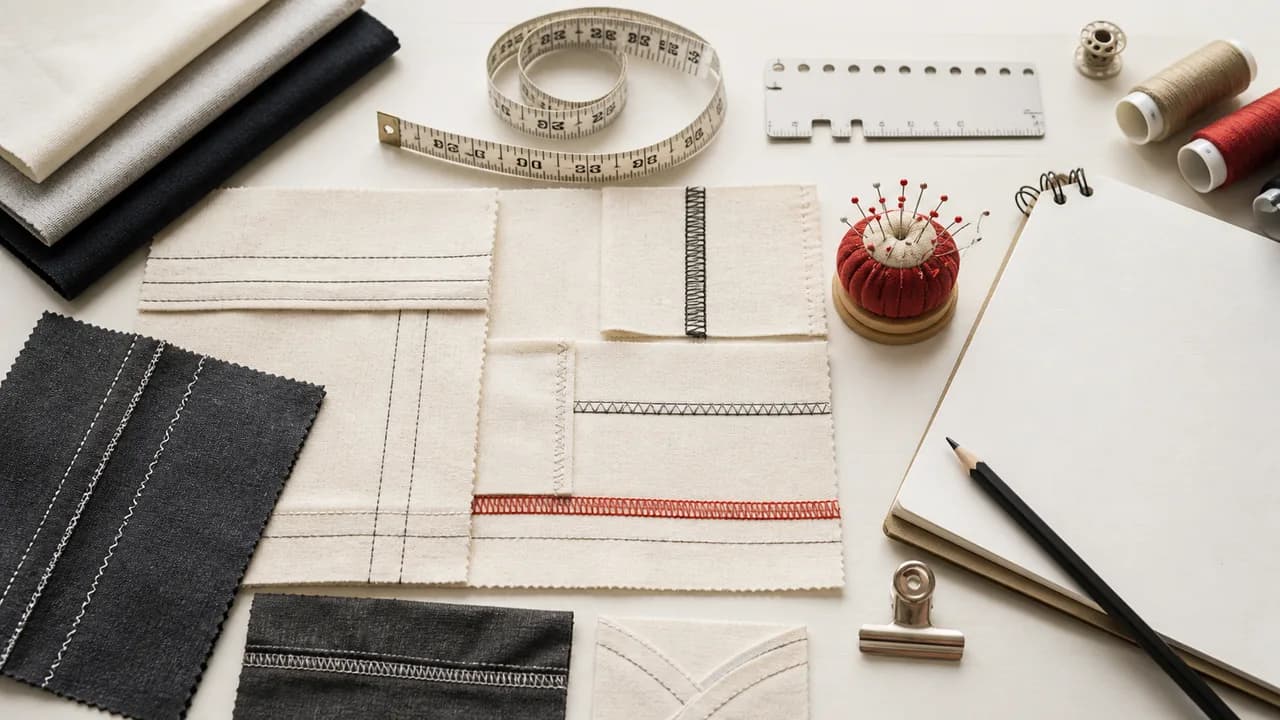
Key takeaways
- Sewing specifications affect appearance, comfort, strength, cost, and lead time
- Woven and cut-and-sew products require different factory strengths and checks
- Sample review should separate measurements, strength, and brand appearance
- Preparing required and flexible specifications improves quotes and revisions
Find OEM suppliers for these conditions
Sewing turns fabric parts into a finished product
When making apparel through OEM or ODM, it can be tempting to think that a design automatically becomes a garment once it is handed to a factory. In reality, fabric selection, pattern making, cutting, sewing, pressing, and inspection all need to connect before the product becomes sellable.
Sewing is the process of joining cut fabric parts with machines or handwork so they become a garment or sewn product. A T-shirt joins body panels, sleeves, collar, and hem. A shirt involves more detailed parts such as collar, cuffs, placket, yoke, and pockets.
Sewing is not only stitching cloth together. The factory must consider sewing order, bulk, stress points, and whether the same quality can be repeated in production.
- Turns cut parts into a product
- Sewing order and bulk affect quality
- Production repeatability matters
Sewing specifications affect finish and manufacturability
Sewing specifications define how each part is sewn. They include whether topstitching is visible, whether seams are enclosed, whether edges are overlocked, whether double-needle stitching is used, whether a facing is added, and whether interlining is applied.
Specifications influence not only appearance but also comfort and durability. Visible stitching can feel casual and sturdy, while hidden stitching can look cleaner or more refined.
The tradeoff is that complex specifications can raise labor cost and defect risk. Sewing specifications are both design decisions and production decisions.
- Stitch width and thread color
- Seam allowance and edge finish
- Interlining and facing choices
- Production-friendly process
Woven apparel and cut-and-sew require different sewing logic
A common distinction in apparel OEM is woven apparel versus cut-and-sew knit apparel. Woven fabrics are used for shirts, blouses, pants, jackets, and dresses. They are less stretchy and can create clean structure, but pattern and sewing accuracy strongly affect the silhouette.
Cut-and-sew knit fabrics are used for T-shirts, sweatshirts, hoodies, and similar items. Their stretch supports comfort, but necklines, cuffs, and hems can wave, stretch out, or lose shape if the construction is not planned well.
Even within tops, a factory skilled in woven shirts may differ from a factory skilled in T-shirts or sweatshirts. When choosing a partner, check experience with the exact material and item type you plan to make.
- Wovens are common for shirts and jackets
- Knits are common for T-shirts and sweats
- Choose a factory with material-specific experience
Basic sewing details to check
Beginners should understand basic details such as overlock finishing, enclosed seams, topstitching, double-needle stitching, coverstitching, and interlining. Overlock finishing prevents raw edges from fraying and is common in many garments. Enclosed seams hide raw edges and can improve both appearance and skin feel.
Topstitching is visible stitching on the outside of the product. It can become a design accent, but small differences in stitch width or thread color change the impression. Double-needle stitching and coverstitching are common on knit hems and cuffs.
Interlining is used to add body and shape to collars, cuffs, plackets, bag handles, and similar parts. If it is too strong the product feels stiff; if it is too weak the shape may collapse. Samples are important for checking this balance.
- Overlock finish
- Enclosed seams
- Topstitching
- Double-needle and coverstitch
- Interlining
What raises sewing cost
Sewing cost is heavily affected by work time and difficulty. Products with many parts, many pockets or zippers, many curves, stacked thickness, or pattern matching usually take more time to sew.
Small details can become large costs in production. Adding one pocket, more stitching, lining, piping, or handle reinforcement increases labor time per unit.
Design detail matters, but for a first production run, separate details that help sales from details that mainly add complexity without clear customer value.
- Many parts
- Many pockets or zippers
- Stacked thickness
- Pattern matching
- Reinforcement or lining
Common sewing problems
Common sewing problems include size deviation, crooked stitching, broken thread, fraying, puckering, left-right imbalance, needle marks, stains, and poor thread trimming.
Puckering means the area around the seam waves or pulls. It can happen when the fabric, thread, needle, machine setting, and sewing method do not match well.
For bags and sewn goods, handle strength, bottom seams, zipper areas, and corner finishing are especially important. If the product carries weight, check load resistance and reinforcement, not only appearance.
- Size deviation
- Crooked stitching
- Puckering
- Left-right imbalance
- Poor thread trimming
Review samples by size, strength, and appearance
When a sample arrives, do not judge only by first impression. First check whether measurements such as length, width, shoulder, sleeve, waist, inseam, handle length, and pocket position match the specification.
Next check sewing stability. Look for crooked seams, fraying, thread breakage, messy thick areas, and weakness at stress points.
Finally, review the brand impression. Stitch width, thread color, tag position, collar and hem appearance, and overall silhouette should match the intended price point and brand image.
- Measure key dimensions
- Check stress points
- Review thread color and stitch width
- Confirm fit with target price point
Information to prepare before inquiry
Before contacting a sewing factory or OEM partner, prepare the product category, reference images, target material, size range, quantity, delivery target, expected retail price, target cost, sample purpose, and important specifications. This improves quote and proposal accuracy.
Not everything needs to be final. However, separate must-keep conditions from areas where you can accept the factory's proposal.
For example, the silhouette may be fixed while the pocket specification can be simplified; the delivery date may be fixed while thread color can follow factory advice; the outside appearance may matter while the inside finish can use a standard method. Clear priorities help the factory balance cost, timing, and quality.
- Product category and references
- Material, size, and quantity
- Target timing and cost
- Required and flexible specifications
Summary
Sewing is a critical process that shapes product quality in apparel OEM and ODM. Even with the same design, specifications, material, pattern, interlining, thread, stitch width, and process order can change appearance, comfort, strength, cost, and lead time.
Beginners should first understand woven versus cut-and-sew products, basic sewing specifications, cost drivers, and how to review samples.
When placing an order, organize not only the finished image but also which specifications are required and which can follow factory advice. Understanding sewing basics makes factory communication more concrete and improves quote, sample revision, and production decisions.
FAQ
What are sewing specifications?
They define how each part is sewn, including stitch width, seam allowance, edge finish, interlining, facing, double-needle stitching, and similar details.
Should woven and cut-and-sew products use different suppliers?
Sometimes yes. Woven shirts, jackets, T-shirts, and sweatshirts require different equipment and know-how, so check experience with the exact material and item type.
What makes sewing labor cost higher?
Cost tends to rise when more labor is needed because of many parts, pockets, zippers, thickness, curves, pattern matching, lining, reinforcement, or special machines.
What should I check on a sample?
Check measurements, seams, thread trimming, bulky areas, stress points, stitch width, thread color, tag position, and overall silhouette.

Written by
AnyLot Editorial Team
We organize practical information on OEM sourcing, supplier comparison, and first production runs so brand teams can review key conditions with confidence.
Related articles
What Is a Pattern? The Apparel Blueprint to Know Before OEM or ODM Production
A beginner-friendly guide to apparel patterns in OEM and ODM production, including their role, industrial patterns, and impact on quality, cost, fit, and sizing.
ReadFabric Sourcing Basics for OEM and ODM Beginners
A beginner guide to fabric sourcing for apparel OEM and ODM, covering stock, consumption, reorders, MOQ, cost, lead time, and production risk.
ReadWhat Is Sample Sewing? What to Check Before Apparel OEM Production
A beginner-friendly guide to sample sewing in apparel OEM and ODM projects, covering why samples matter before production, why they cost more, what happens if you skip them, and what to prepare before requesting one.
Read